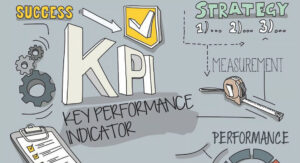
 Measurement is an essential management tool since it allows us to focus improvement efforts, manage resources, demonstrate value, and determine whether our activity is having an impact. This is where KPIs come into play.
What are KPIs?
KPIs, or key performance indicators, provide quantifiable metrics that help organizations track their progress and effectiveness in achieving strategic goals. By utilizing KPIs, you can make informed decisions to enhance performance and drive success.
The key is to choose KPIs that are closely linked to your strategic goals and that provide insights into your business’s performance. KPIs provide you with factual, data-driven insights that can help you make informed decisions.
Setting and evaluating the appropriate KPIs is the best method to evaluate the effectiveness of your efforts and keep on track to meet your goals, whether you are developing landing pages, email marketing campaigns, or expanding your social media following.
11 Useful KPIs You Should Be Using Today
Whether you are running email marketing or social media campaigns. SEO, or digital marketing strategies. Here are 11 KPIs that you should be tracking today.
Paid Advertising
- Cost Per Click (CPC) During a campaign, this is the total cost of each click. This cost will depend on how your competitors are bidding on a particular keyword or audience.
Email Marketing
- Open Rate. This will give you insight into how engaged and interested your email subscribers are, as well as how effective different email subject lines can be.
- Click-Through Rate (CTR). This measures how many recipients have clicked on the links within your email. CTRs are typically lower than open rates, with an average of 2-2.5% across all industries.
- Unsubscribe Rate. This tells you how many people have unsubscribed after receiving your email.
Social Media
With 63.7% of people using some form of Social Media. It gives the perfect opportunity to get your product or service directly in front of your target audience and find new customers.
-
Engagement. Arguably one of the most important KPIs in social media. Engagement measures the number of likes, followers, comments, and shares. However, it’s quality over quantity here because it doesn’t matter how many followers you may have if they aren’t interacting with the content they have decided to follow.
- Post Reach. Not to be confused with impressions, reach is used to determine who sees your content. Having a high reach is good for brand awareness however, you still want users to engage with your content too.
- Follower Count. One of the easiest metrics found on any social media platform. It is easy to monitor and tells you how many accounts are keeping up with your brand or service.
SEO (Search Engine Optimization)
- Organic Traffic. This indicates how many people have visited your website after finding it through a search engine and shows how well your content and SEO efforts are working.
- Bounce Rate. This is the proportion of visitors to your website that leave after just looking at one page instead of perusing several of your sites pages.
- Click Through Rate (CTR). As with Email Marketing. This is the percentage of users who click on your website after seeing it in search results.
- Backlinks. These are incoming links from other websites. More backlinks from reputable websites are frequently seen by search engines as an indication of trustworthiness.
Conclusion
Gaining clients and boosting sales are the two main objectives of marketing. Always be sure to measure over a consistent time period and be detailed when assessing KPIs. Your objective will always determine the particular KPIs you want to track. For example, if your goal is to increase brand awareness, you might focus on metrics such as social media engagement and website traffic. Whereas, if your aim is to drive sales, tracking conversion rates and average order value will be more relevant to gauge your success.